
The pride of having Arab roots in modern Spain
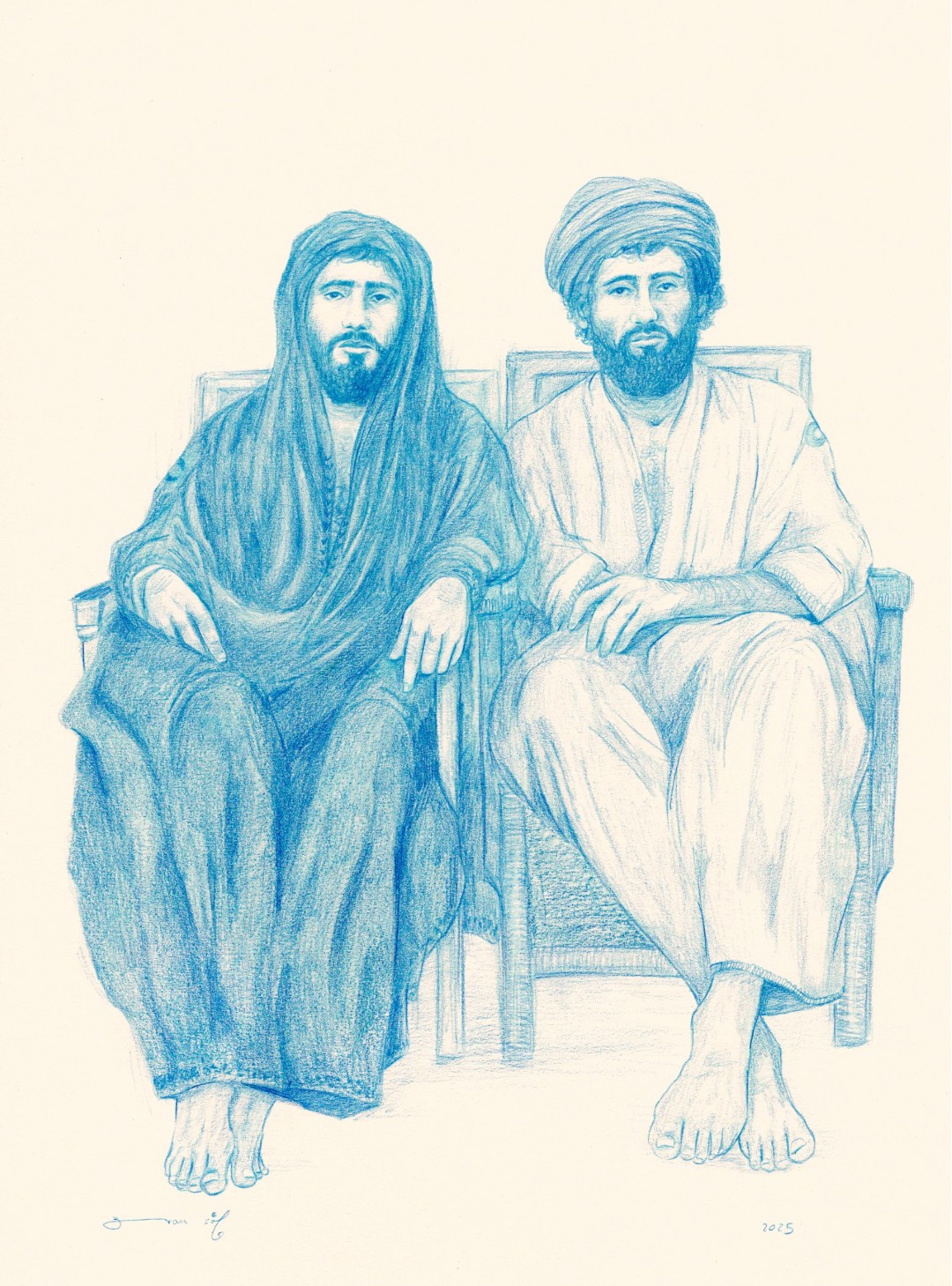
I am also an Arab, like you, and I have been here for more than 1300 years.
My blood settled in this land in the year 711, when Tariq ibn Ziyad crossed the strait that today bears his name -Yabal Ṭāriq, Gibraltar- and, in command of a Berber contingent from North Africa, began what would later be known as the Islamic conquest of the Iberian Peninsula. That event was not a simple military invasion, as some nationalist discourses would have us believe, but the beginning of a complex cultural, religious, scientific and social transformation that would profoundly mark the destiny of what we know today as Spain.
The Arab-Islamic presence in al-Andalus was not ephemeral: it lasted nearly eight hundred years, from the 8th century until the capture of Granada in 1492. During this period, cities such as Cordoba, Seville and Toledo became centers of knowledge and coexistence between Muslims, Jews and Christians. Through the House of Wisdom, translations from Arabic into Latin, and the development of architecture, medicine and poetry, al-Andalus shaped an essential part of the European legacy.
This civilization is an inseparable part of my genealogy: on my father’s side, the Qobarro; on my mother’s side, the Yepes. Both lineages have roots in Abarán, a corner of the Ricote Valley in the ancient kingdom of Murcia, where the Moors, even after the capitulations, continued to live, cultivate and transmit an identity in resistance.
Before settling in Abarán, my lineage came from Mudejars from Hellín, and it is very likely that they were previously settled in the Tolmo de Minateda, one of the most important archaeological sites in the southeastern peninsular, with a continuous presence from Iberian times until the Middle Ages. The passage of time and the persecutions did not erase that memory, which still persists in the land, in the names and in the blood.
When, in 1492, the Catholic Monarchs concluded the so-called Reconquest, a new stage of systematic exclusion began. In 1502, Muslims in the kingdom of Castile were forced to convert to Christianity or be expelled, and this order was extended to the Crown of Aragon in 1526. The new Christians, called Moriscos, lived under constant suspicion, surveillance and persecution. In 1567, Philip II issued a pragmatic decree that expressly prohibited the use of the Arabic language, Moorish customs, and -among other provisions- prevented them from being offered work or help. Finally, in 1609, Philip III decreed their definitive expulsion. Nearly 300,000 people -among them my great-great-great-grandparents Hernando and María Luisa- were banished. There are records that attest that Hernando and his wife were forcibly embarked and abandoned in the city of Genoa, stripped of their lands, belongings and dignity. The documentation of the time reflects how many were treated as enemies of the State, and how they were denied any type of aid, in compliance with the provisions decreed by the Crown.
But some returned. They went back to their homes, to the Moorish quarters, with their dignity intact and their will unshaken. Because this land was theirs. Not by conquest, but by cultivation, by history, by memory.
And here we continue. My family has been on this soil for more than 1300 years.
It is particularly striking that those who today set themselves up as guardians of national identity ignore this history. From a homogeneous and white-centered conception of Spanish identity, they deny the plural character of its origin. They want to expel those who arrive to the peninsula in boats full of death, looking for a possibility to continue existing, fleeing from war and misery.
They want to convince us that they are dangerous, thieves, terrorists, rapists, murderers… that we must close the door to all those who are not faithful to the ideal of national identity: white, cis, straight, Catholic, ignorant.
Poverty and marginalization cause the violent need to subsist at the expense of others. The only dangerous immigration is that which is rejected.
In the same spirit, to give another example, they have reacted to the Israeli-Palestinian conflict in the framework of the Eurovision Song Contest 2025.
Israel’s participation, in an international context where it is accused of war crimes and genocide against the Palestinian population (according to reports from the United Nations and organizations such as Human Rights Watch and Amnesty International), was widely questioned. RTVE, even from within, expressed its opposition to Spain sharing the stage with a State accused of such practices, an initiative which I personally support.
However, it seems, if Israel has not bought the festival votes, that a significant part of the Spanish population, influenced by right-wing and ultra-right media sectors, decided to support Israel, not because of geopolitical affinity, but as a form of opposition to the current progressive Spanish government, which has shown support for the Palestinian cause from the beginning, even recognizing it as a state in 2024.
For good measure: a member of the PP leadership posted on X, the Nazi social network, her intention to vote for Israel, according to her, “without having heard the song”. Juan Carlos Girauta, a Vox MEP, encouraged to “send a message to Sánchez” along with the vote for Israel, and the PP youth publicly celebrated having managed to get Spain to give its 12 votes to Israel, sharing the payment vouchers of the online votes they made.
All these people have lost their way, I would like to think, and are not capable of rejecting a genocide if by doing so they can harm the current government. Their only desire is to be in office, no matter what it takes, and no matter what.
This phenomenon reveals the extent to which the concept of freedom has been perverted: it is defended only when it responds to self-interest. It denies the possibility that others may live, flee, love or seek refuge in a different way. Those who are different are marginalized, whether because of their faith, their gender identity, their migratory status or their history.
This reaction is not new. It is a symptom of a power structure that reproduces itself in the name of normality and is sustained by historical ignorance, forgetfulness and exclusion. Reactionary thinking is not based on the preservation of values, but on the fear of losing privileges. It does not tolerate conflict or ambiguity because it lives in the fantasy of a unique, immutable and superior identity. And so, history is rewritten to silence those who have always been there.
But this land, as history shows, is not the property of one race or one religion. The Iberian Peninsula has been Iberian, Celtic, Roman, Visigoth, Arab, Jewish and Christian. It has been a port and a bridge. And its greatest wealth has always arisen from its capacity to welcome, to mix, to dialogue.
Today, in the midst of the ideological noise, it is worth remembering that freedom is not a battle cry, but an ethical commitment. It is not a matter of imposing one truth, but of opening space for others to exist. It is the willingness to listen to others, to recognize their pain, to share bread and shelter. And above all, not to forget.
My name is Bran Solo and my Arab blood has inhabited these lands since 711 c.e. My ancestors were marginalized, deported, dispossessed and silenced. But they returned, for this is their home and will remain so.
Bran Sólo. Mayo-2025
Sources and publications of interest:
- García-Arenal, Mercedes. Los moriscos. Madrid: Fundación MAPFRE, 2009.
- Epalza, Mikel de. Los moriscos antes y después de la expulsión. Barcelona: Icaria, 1992.
- Bennison, Amira K. The Great Caliphs: The Golden Age of the ‘Abbasid Empire. Yale University Press, 2009.
- Human Rights Watch. “Israel and Palestine: Events of 2023”. www.hrw.org
- United Nations Human Rights Office. “UN experts warn of serious human rights violations in Gaza.” Octubre 2023.
- Boletín Oficial del Estado (Archivo Histórico). “Pragmática de Felipe II prohibiendo el uso de lengua árabe y costumbres moriscas”, 1567.
- Harvey, L. P. Muslims in Spain, 1500 to 1614. University of Chicago Press, 2005.
- Ruiz Souza, Juan Carlos. “La arquitectura en al-Andalus: identidades, transformaciones y supervivencias.” Al-Qantara, CSIC.
-
Marín, Manuela. La vida en al-Andalus: sociedad, cultura y economía. Madrid: Akal, 1994.