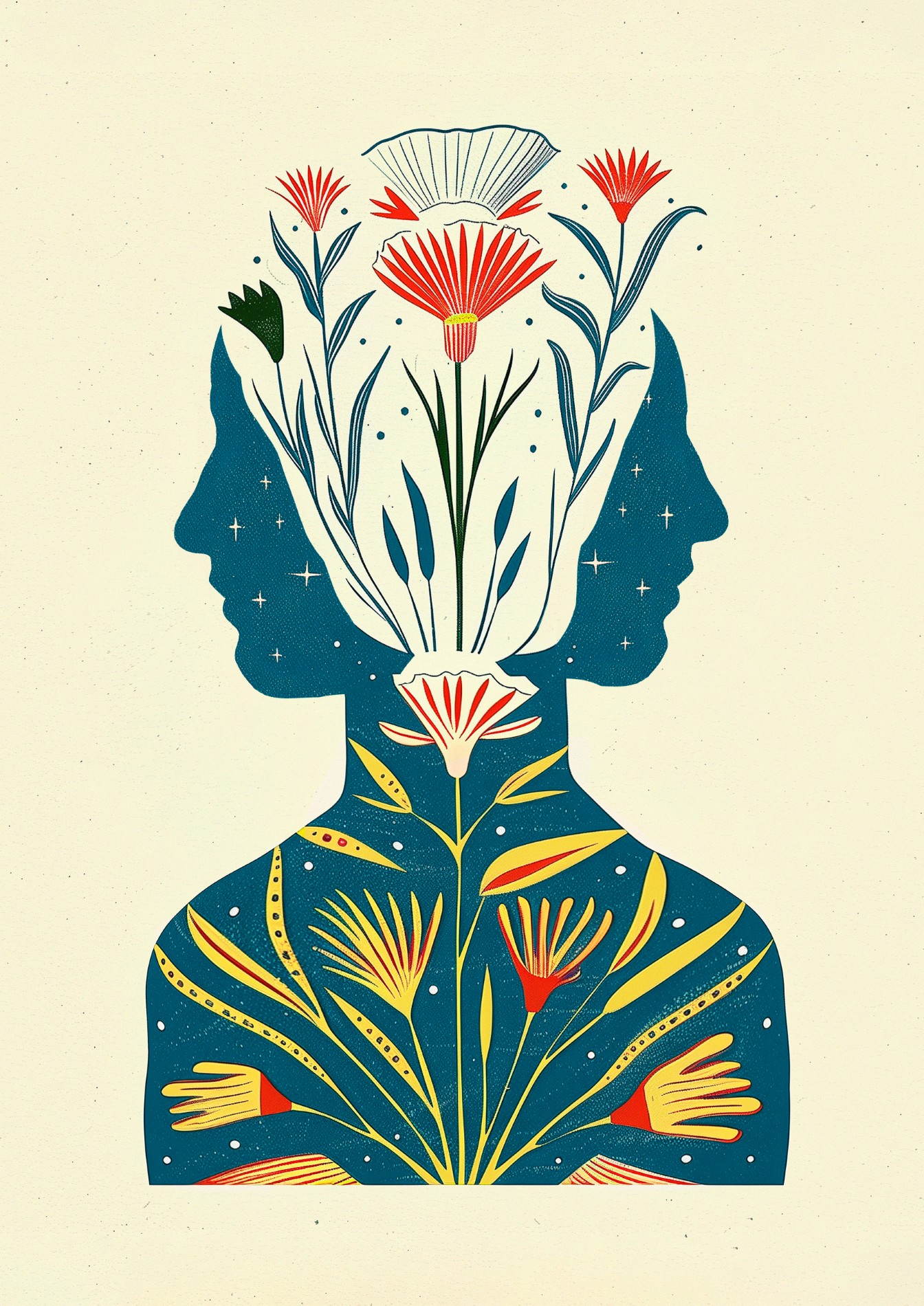
 Is anyone really left-wing or right-wing by mystical vocation? Rather, I believe, we are so by biography. Political affinity is not born with us, nor is it chosen as one chooses the color of the sofa. It is inherited, it is learned, it adapts to the circumstance like a glove to the hand that needs it.
For example: those who are born into a precarious environment, where justice is a hollow word and opportunities are handed out as if they were bitter candy, end up developing a sensitivity that does not leave them indifferent to inequality. Hence, many people with these life experiences embrace progressive positions: they seek to change the system because, frankly, the system never embraced them. Who will want to preserve what has never protected them?
Conversely, if one has always lived with central heating, private insurance, compound surnames and “everything in order, as God intended,” it is quite natural to want things not to change too much. Conservatives, as their name suggests, conserve. They conserve order, resources, the way of life… and if it can be cultural hegemony, so much the better. They call it “freedom”, but often it is fear of losing their privileges disguised as civic virtue.
To be clear: If you do not have problems, you will want not to lose privileges and it will be very difficult for you to empathize with those who do have them, and if you have problems, you will be more sensitive to injustice and inequality, and it will be easier for you to want to fight to change things. Our political ideas are a direct reflection of our personal circumstances, and not of an objective analysis of the needs of society as a whole.
Psychology has looked into the matter -of course- and has found personality differences between progressives and conservatives. The former tend to be more open to new experiences (translation: they withstand existential crises better), while the latter prefer order and stability (i.e.: don’t touch anything, they have everything tied up).
At the brain level there are also differences: conservatives have a more active amygdala, which makes them more sensitive to fear and threat. Liberals, on the other hand, use more of the anterior cingulate cortex, which helps them adapt to the unexpected. One sees danger in everything that moves, the other doubts everything – sometimes even himself.
Who decides what we are?
Affiliating to an ideology like someone who gets a Chicago Bulls membership card is not such a good idea. No one is completely of anything, unless they have given up thinking. But that, unfortunately, happens more often than we would like.
Many vote by inertia, by inheritance, by comfort. Sometimes even by rebound: “I am a leftist because my father was a fanatic”. As if political identity were a poorly resolved family duel. In social networks, things are already bordering on tragicomedy: people argue more about loyalty to one side than about ideas. We turn politics into soccer: eleven against eleven and let’s see who can shout the loudest. The problem is that here we are not playing for a cup, we are playing for the present and the future.
What is often presented as “traditional values” is nothing more than the defense of an order that excludes. If you are not white, nationally born, heterosexual, Catholic and from a good family – the whole combo – conservatism has nothing to offer you but suspicion. It’s easy to say “every man for himself” when you’ve already got yours figured out. And so, the discourse of self-sufficiency becomes contempt disguised as meritocracy.
The uncomfortable thing about all this is that it forces us to look inward. Thinking for oneself requires effort, and sometimes it even hurts. It is much easier to delegate one’s political conscience to a party, to an ideology, to a leader with a firm voice and arched eyebrow (I love you, ZP). But if we really want a politics that represents us, we will have to start by understanding why we think the way we think.
If only political parties did not exist, and our representatives were just that, representatives, messengers of our votes. If only every Sunday we were summoned to the polls to decide, with the supervision of various committees of experts who educate us, but do not influence us from economic interests, to decide each of the actions that the government carries out.
I wish a policy of all, and not of half.
Bran Sólo. Mayo-2025